
San Francisco Same-Day Arrest Status
San Francisco County publishes no Sheriff page that lists new bookings on a rolling 24-hour clock. The old SFPD arrest-log web address no longer works. It either fails or lands on the home page. That shift trips people up. A dead bookmark or a copied list is not a complete official feed.
SFPD still keeps its Daily Arrest Information Form 307. That form spans the police reporting day, 0001 through 2400. Department instructions call for internal email distribution by 0900, and a "No arrests on this date" entry goes out when nothing happened. None of that promises a public 9 a.m. upload. It also says nothing about how often the Sheriff's database refreshes.
Check San Francisco Arrests Today
Start with current custody, then confirm directly. The San Francisco Sheriff Find a Person in Jail locator covers anyone whose intake data has reached the county system. Search by name, SF number, or booking number. A name alone is not enough. Match any result against age, booking date, facility, and court fields, since people share names.
- Enter the first three letters of both the first and last name. Use an exact SF number or booking number when available.
- Check the booked-on date and facility. County Jail #1 is the Intake & Release Center, though later housing can differ.
- For a time-sensitive result, call the jail and arrested-person information line at (415) 553-1430.
- If there is no match, consider citation and release, another jurisdiction, or unfinished intake.
- Request a specific record through the SFSO public-record route when a completed booking is not visible.
A custody result beats a social post or a copied list. Still, it is only a snapshot. Someone released may drop off the current roster. The agency still keeps the record. The official jail locator page shows the fields a fresh booking check returns.
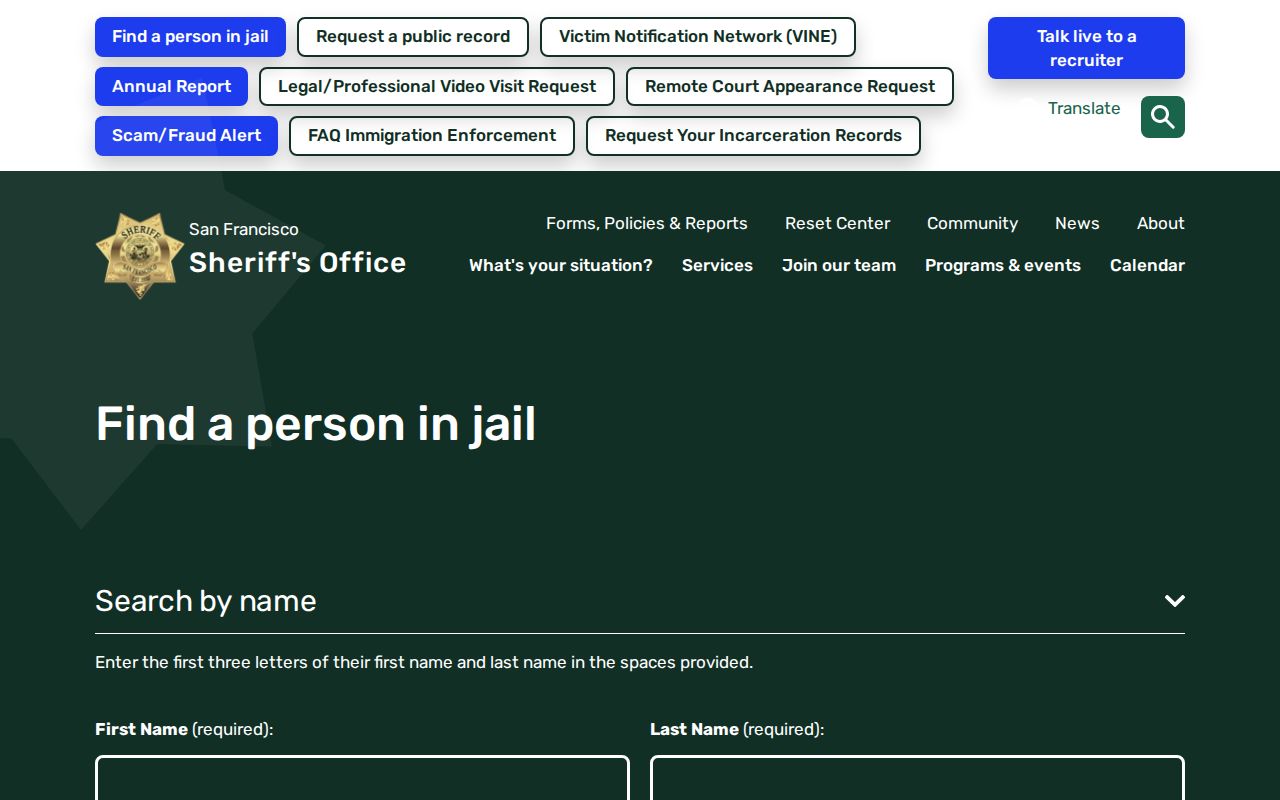
The tool looks up one name at a time. It has no photo list. You can't browse every booking there. Each search returns one record.
San Francisco Arrest Fields Compared
These two sources answer different questions. Form 307 reports what SFPD logged during a calendar day. The Sheriff card reflects an accepted booking and current custody. Blend them and you get a false record. Neither source offers a public same-day photo feed.
| Field | Source and meaning |
|---|---|
| Name | Both sources; confirm identity with other fields. |
| Arrest time | Form 307; police event time, not booking time. |
| Booked-on date | Sheriff locator; county intake event. |
| Case or arrest number | Form 307; distinct from booking and court numbers. |
| SFNO and booking number | Sheriff locator; identifiers for a person and event. |
| Charges | Reported charges whose wording can later change. |
| Facility, bond, next court date | Current Sheriff custody-facing fields. |
| Booking photograph | Not rendered in the current locator or a verified daily feed. |
Form 307 has also carried addresses, birth dates, sex, arrest location, and statutes. Sensitive details deserve care. A form may hold them. That does not mean they should be republished. Pull only the details that identify the correct official arrest record.
Note: A police arrest time and a Sheriff booked-on date mark separate stages, so they need not match.
Why San Francisco Bookings Lag
An arrest is a process, not an instant web entry. County Jail #1 runs identity checks and medical screening. It also handles fingerprints, photographs, warrant checks, property inventory, classification, and release review. A booking must be accepted and entered first. Only then can the locator return the name. San Francisco County publishes no fixed refresh interval. No time estimate can promise when a new booking appears.
A blank result has other explanations. A person might be cited and released, diverted, or moved to another jurisdiction. They could also be arrested after the Form 307 reporting day or released before the search. A later facility value can differ from County Jail #1. Intake and long-term housing are separate stages. The Sheriff Intake and Release Center page explains the process officially.
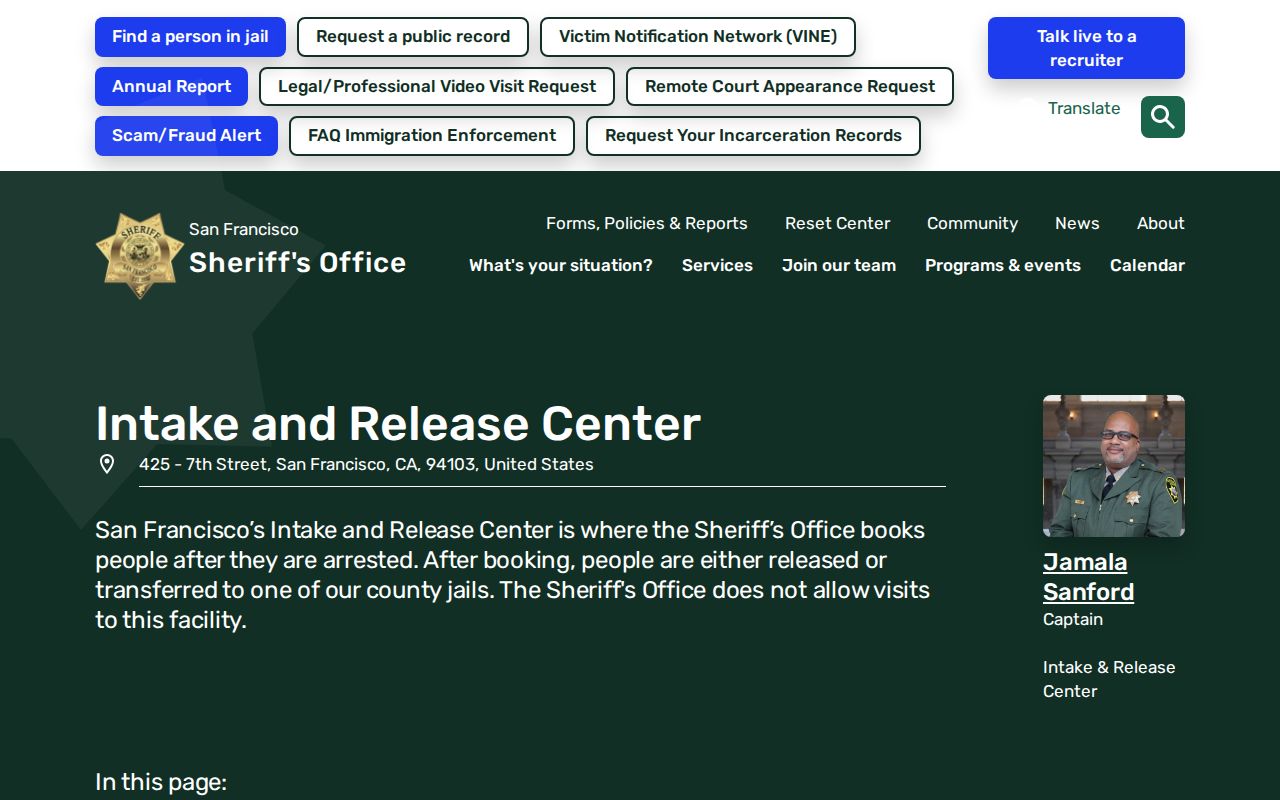
Jail intake moves in stages. Each step takes time. That is why an arrest, a booking, and an online listing rarely happen at the same moment in San Francisco County. Visibility comes last.
When San Francisco Arrests Are Missing
When the old daily page and the locator both come up empty, work a fallback chain. Confirm the spelling first. Retry with the minimum name input. Use an SFNO or exact booking number if you have one. For jail information, call (415) 553-1430. SFSO lists (415) 553-1444 for urgent after-hours concerns about someone in custody.
Keep the request focused. Give the full name and the approximate arrest or booking date. Include the arresting agency and any case, SF, or booking number. Say whether you want Form 307, a booking record, or a photograph. The SFSO portal posts no fixed photo fee or delivery time. Ask for an estimate and an electronic copy. The official SFSO record request page covers the rest.
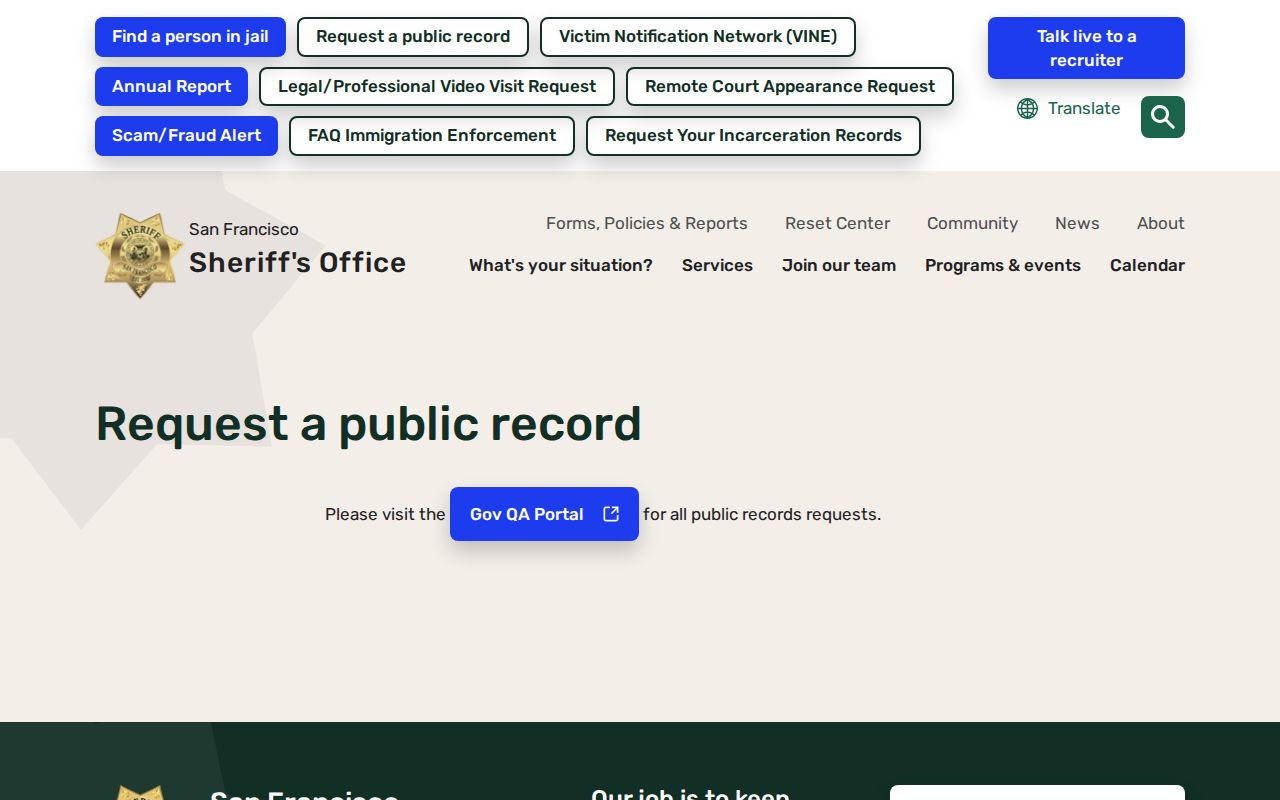
One booking is easy to pull. A sweeping request is not. Narrow the ask to a name, a date, and a case or booking number. Staff can then find the San Francisco County arrest record far faster.
San Francisco Arrest Photos Online
The Sheriff's locator shows booking details but no booking photograph. That doesn't mean no photo exists. A mugshot can sit in a file even when the public interface leaves it out. Getting a specific image usually takes a record request. The Sheriff can withhold or redact it under California law. So a blank result card is not proof of anything.
There's no separate San Francisco County jail app with a photo roster. The responsive locator is the mobile option. Sheriff social accounts and SFPD news releases post selected messages, not every arrest. State law also restricts how agencies publish booking photographs on social media for many nonviolent cases. Unofficial pages offer little help here. Old or copied images get labeled recent. Those sites can't confirm who is actually in custody, what the charge really is, or how the case ended. Official records come first.
San Francisco Arrest Charges Change
A booking charge is just what gets entered at intake. It can change. Prosecutors may drop it or amend it. A case can end in dismissal, reduction, diversion, acquittal, plea, or judgment.
The locator may also list docket rows and bond. It can show a court department and a next court date. Those fields help you find a matter. For anything later, the San Francisco Superior Court case system is the real source, covering proceedings well past booking. Check dates there, since custody data can lag behind what the court has already changed.
Match Arrest Records to Custody
Pick a source that fits the person's stage. Someone just arrested may still sit with the arresting agency. After booking, the person can show up in the SFSO locator. Once released, that view drops the name. Police, Sheriff, and court records keep it even so. A person sent to state prison moves to the California Department of Corrections and Rehabilitation CIRIS search. That puts the person off the county roster.
- Arrest
- A law-enforcement action that begins the process and does not establish guilt.
- Booking
- Formal intake and recording by the receiving agency or jail.
- Disposition
- The court's later outcome, which may differ from the initial charge.
- Release
- Departure from custody, not necessarily the end of a case.
Matching the channel to the stage stops a missing roster entry from turning into a false claim that no arrest occurred. For updates on one person, use the VINELink Check. For delayed police forms spread across dates, search the Arrest Log.
Public Record Search
Sponsored Results